
Listen · 2 min
0:00
Quality and speed matter to good hiring. Go slow enough to know the candidate well but fast enough another competitor can't seize the initiative.
Compress the Timeline
- Minimize time elapsed between application, interview, 2nd interview, and offer. This is an easy improvement. Simply maintaining momentum advantages you over slower competitors.
- Enlist all the hiring authorities up front and schedule longer interviews instead of multiple interview sessions which can eat up days or weeks.
Build Systems That Remove Friction
- Systematize your scheduling process. Hold interviews on a consistent day. Bring order to chaos. Minimize your intellectual investment into meaningless logistics.
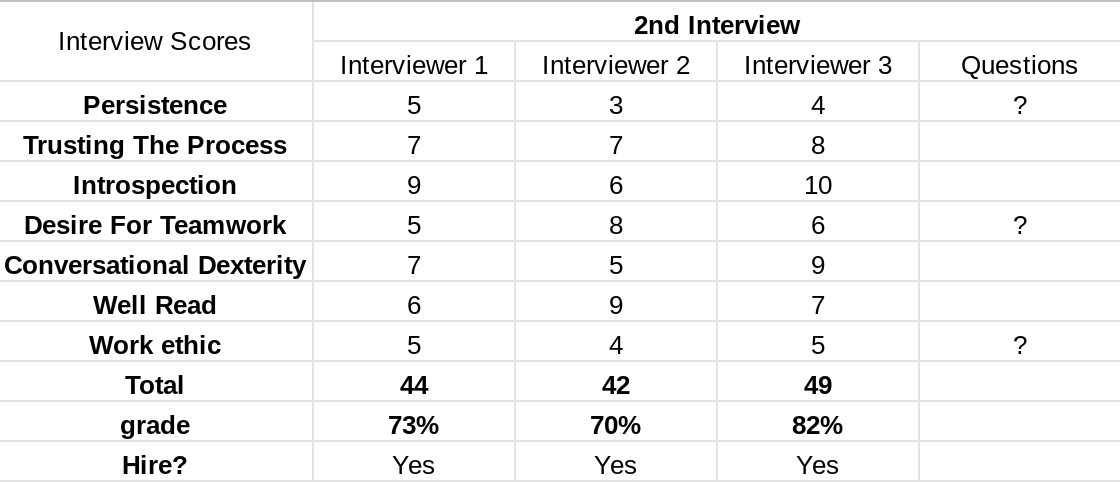
- Build a scorecard for interviews. Knowledge, skills, and character should be evaluated. All interviewers submit their responses within an hour and anonymously, after which they discuss their answers. This provides an agenda and cohesive thought process. Stay out of the meaningless weeds. Below is a version we use at Ambassador Search Group for internal hires.
Align the Candidate to Your Process
- Set the candidate's expectations for a systematic, thoughtful, disciplined, and expeditious process. Your care for quality AND efficiency will impress the candidate. Gain their commitment to making their corresponding decision equally careful and efficient.
Questions, answered
The short version.
- How fast should a hiring process move?
- Slow enough to know the candidate well and fast enough that a competitor cannot seize the initiative. Momentum alone puts you ahead of slower competitors.
- How do you compress a hiring timeline?
- Minimize the time between application, interviews, and offer. Enlist every hiring authority up front and schedule longer interviews instead of multiple sessions.
- How do you remove friction from scheduling?
- Systematize it. Hold interviews on a consistent day, and build a scorecard covering knowledge, skills, and character that every interviewer submits before any discussion.


